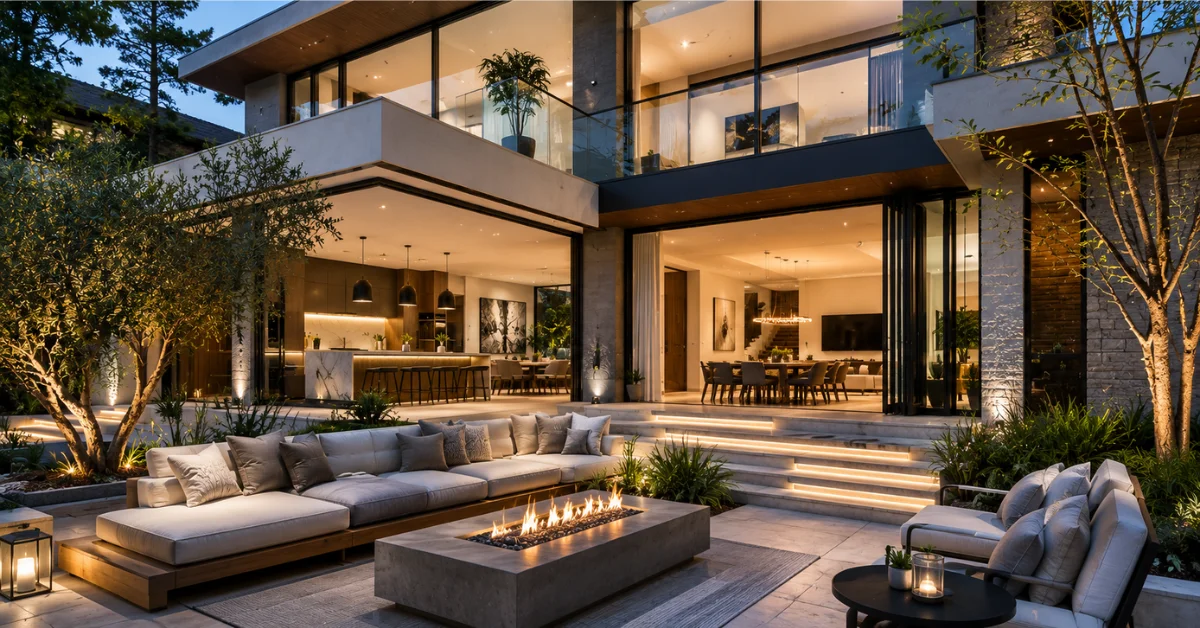
Unlike a fixed historical style, contemporary home design ideas evolve with the times, reflecting whatever feels current, relevant, and fresh right now. That flexibility is exactly what makes this approach so appealing to homeowners who want a space that feels up to date without locking into one rigid look forever. This guide breaks down practical contemporary home design ideas you can use to update your home room by room.
Understanding Contemporary Home Design Ideas
Contemporary home design ideas differ from modern design in an important way: modern refers to a specific historical period, while contemporary simply means current. This means contemporary home design ideas borrow freely from modern, minimalist, and even traditional influences, blending them into something that feels distinctly of the moment. Curved furniture, mixed materials, and an emphasis on sustainability are common threads running through most contemporary interior design today.
Embrace Curved and Organic Shapes
One of the clearest contemporary design trends is a move away from strictly rigid, angular furniture toward softer, curved silhouettes. Rounded sofas, oval coffee tables, and arched doorways are frequent features in contemporary home design ideas because they feel more welcoming than the sharp lines associated with older modern styles. This shift toward organic shapes is one of the easiest contemporary home design ideas to spot in showrooms and design magazines right now.
Mix Materials With Confidence
Contemporary home design ideas often combine unexpected material pairings, such as raw wood alongside polished chrome, or matte stone next to glossy lacquer. This contrast keeps a room visually interesting without relying on heavy pattern or ornamentation. When applying contemporary interior styling, aim for two or three dominant materials per room so the mix feels intentional rather than random or cluttered.
Choose a Flexible, Evolving Color Palette
Because contemporary home design ideas change with current trends, color palettes tend to be more flexible than in fixed historical styles. Warm neutrals, earthy greens, and soft terracotta have recently become popular alongside the classic whites and greys associated with earlier design movements. A flexible palette lets contemporary home design ideas adapt over time, so you can refresh a room with new cushions or art instead of repainting every few years.
Sustainable Materials Are a Growing Priority
Sustainability has become a defining feature of contemporary home design ideas in recent years. Reclaimed wood, recycled metal, and low-impact textiles are increasingly common choices among homeowners who care about environmental footprint alongside aesthetics. This focus on responsible sourcing is one of the contemporary design trends most likely to continue shaping contemporary house design well into the future.
Open, Adaptable Living Spaces
Contemporary living spaces tend to favor flexibility over fixed, single-purpose rooms. A home office that converts into a guest room, or a dining area that doubles as a workspace, reflects how contemporary home design ideas respond to changing lifestyles. Furniture on casters, foldable tables, and modular seating all support this adaptable approach, letting one room serve multiple functions without feeling makeshift.
Statement Lighting as a Design Anchor
Lighting plays an outsized role in contemporary home design ideas, often serving as the visual anchor of a room rather than a purely functional element. Sculptural pendant lights, oversized floor lamps, and linear LED fixtures are common choices. Because contemporary interior design values individuality, lighting fixtures are often chosen specifically to make a statement rather than simply blend into the background.
Contemporary Home Decor and Personal Touches
Contemporary home decor tends to favor a curated, gallery-like approach over dense collections of objects. Choose art and accessories that feel personally meaningful rather than following trends purely for their own sake, since contemporary home design ideas ultimately aim to reflect the people living in the space. Textiles like chunky knit throws, woven baskets, and natural fiber rugs add warmth and texture to balance out sleeker furniture and finishes.
Blending Indoor and Outdoor Living
Many contemporary home design ideas extend the living space outward through large sliding doors, covered patios, and matching indoor-outdoor flooring. This blurred boundary between inside and outside has become a defining trait of contemporary house design, particularly in warmer climates where outdoor living areas function as an extension of the main living space for much of the year.
Contemporary Kitchen and Bathroom Updates
Kitchens and bathrooms show contemporary design trends especially clearly, since these rooms tend to get updated more often than the rest of the house. In the kitchen, handleless cabinetry, waterfall-edge countertops, and a mix of matte and glossy finishes reflect current contemporary interior styling. Open shelving paired with closed storage strikes a practical balance between display and function. In the bathroom, freestanding tubs, frameless glass showers, and floating vanities are consistent features of contemporary house design, offering a clean, spa-like feel. Because these rooms see heavy daily use, contemporary home design ideas here tend to prioritize durable, easy-to-clean materials alongside their visual appeal.
Conclusion
Contemporary home design ideas offer a flexible, evolving approach that adapts to how people actually live today. By embracing organic shapes, mixing materials thoughtfully, choosing sustainable options, and creating adaptable spaces, you can build a home that feels current without becoming quickly dated. These contemporary home design ideas provide a strong starting point for any room you are ready to refresh.
FAQs
What is the difference between contemporary and modern design?
Modern design refers to a specific historical style from the early to mid-20th century. Contemporary design reflects whatever is currently popular, meaning it evolves over time and can incorporate elements from multiple design eras and movements.
What colors are popular in contemporary interior design?
Warm neutrals, soft earth tones, and muted greens are currently popular, often paired with classic whites and greys. Contemporary palettes tend to shift gradually over time rather than staying fixed to one permanent color scheme.
Are contemporary homes eco-friendly?
Sustainability is a growing priority in contemporary design. Many homeowners now choose reclaimed materials, energy-efficient fixtures, and responsibly sourced textiles, making environmental consciousness a defining feature of current contemporary design trends.
What furniture shapes define contemporary design?
Curved and organic shapes, such as rounded sofas and oval tables, are common in contemporary interiors. This softer silhouette contrasts with the sharper, more angular lines typically associated with earlier modern design movements.
Can contemporary design work in an older home?
Yes, contemporary design can work well in older homes. Updating furniture, lighting, and color palette while preserving original architectural details often creates an appealing contrast between historic structure and current design sensibility.
How often does contemporary design change?
Contemporary design shifts gradually, often reflecting broader cultural and material trends over several years rather than changing overnight. This makes it more flexible than fixed historical styles while still feeling current for a reasonable stretch of time.
Leave a Reply