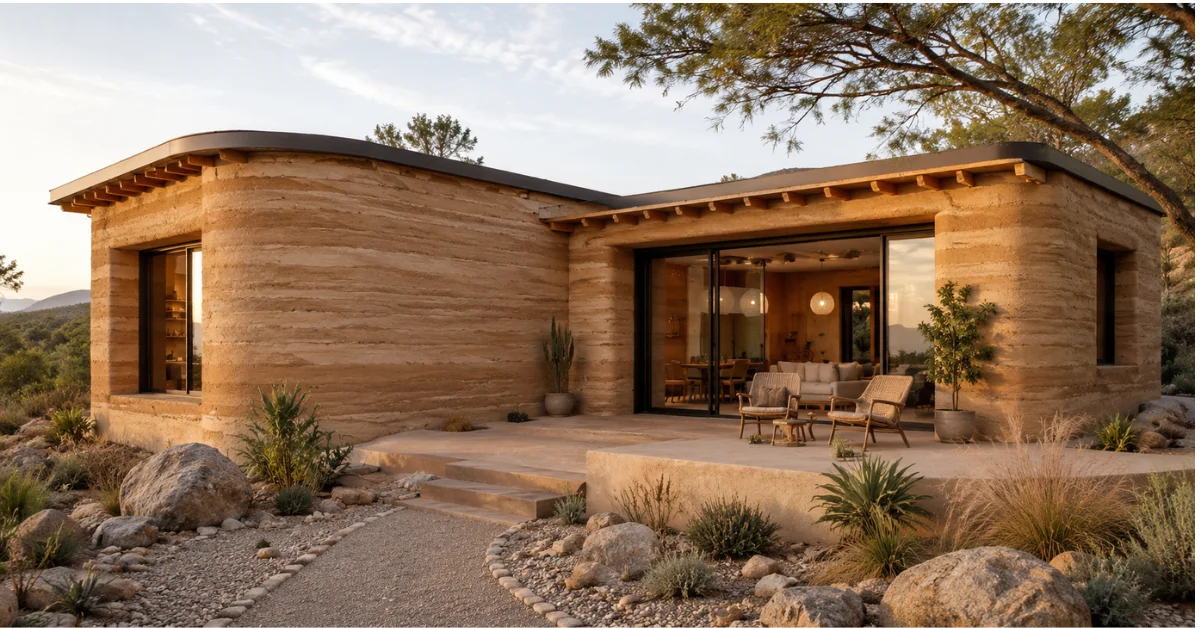
As more homeowners look for alternatives to conventional construction, compacted earth homes have moved from a niche curiosity to a genuinely practical building option. Built primarily from soil, compacted earth homes offer a combination of low material cost, strong thermal performance, and a much smaller environmental footprint than standard brick or concrete construction. If you’re researching sustainable, natural ways to build, compacted earth homes deserve a serious look.
What Are Compacted Earth Homes?
At their core, compacted earth homes are structures built using soil that has been compressed under high pressure, either by hand tampers or hydraulic machinery, into dense, load-bearing walls. This process, often called rammed earth construction, uses a mix of subsoil, sand, gravel, and a small amount of stabilizer such as cement or lime. The result is a wall that is remarkably strong, fire-resistant, and capable of lasting for generations. Compacted earth homes have actually been built for thousands of years, but modern techniques and better compaction equipment have made them far more precise and reliable today.
Why People Are Choosing Compacted Earth Homes
The appeal of compacted earth homes comes down to a few clear advantages. First, the raw material — soil — is often sourced directly from the building site, which drastically cuts transportation costs and emissions compared to trucking in brick or concrete. Second, compacted earth homes offer excellent thermal mass building properties, meaning the thick walls absorb heat during the day and release it slowly at night, keeping indoor temperatures naturally stable in both hot and cold climates. Third, for people drawn to natural home construction, there’s something appealing about living inside walls made from the earth itself rather than manufactured materials.
Compacted Earth Homes and Energy Efficiency
One of the biggest selling points of compacted earth homes is reduced reliance on heating and cooling systems. Thanks to thermal mass building principles, dense walls act as a buffer against outdoor temperature swings. In desert climates, these structures can stay noticeably cooler during the day, while in colder regions they retain warmth longer than thin-walled conventional buildings. Over the life of the building, this can translate into meaningful energy savings, making this approach an attractive option for anyone focused on long-term utility costs.
Compressed Earth Blocks: An Alternative Method
Not every version of compacted earth homes relies on rammed earth construction poured directly on-site. Many builders instead use compressed earth blocks, which are pre-formed off-site using hydraulic presses and then stacked like traditional bricks. This method speeds up construction and allows for more standardized quality control. Compressed earth blocks are especially popular for smaller compacted earth homes or additions, since they don’t require the heavy formwork that on-site rammed earth construction typically needs.
Durability and Maintenance
A common misconception is that compacted earth homes are fragile compared to brick or concrete. In reality, properly built and stabilized earth structures can last well over a century with basic maintenance. The key is protecting the walls from prolonged water exposure—wide roof overhangs, proper drainage, and an occasional protective sealant can go a long way. Because the walls are so dense, these structures also offer strong resistance to fire and pests, two concerns that often come up with timber-based natural home construction.
Cost Considerations for Compacted Earth Homes
Material costs for compacted earth homes are often lower than conventional builds, since soil is inexpensive and sometimes free if it’s excavated on-site. However, labor and equipment costs can offset those savings, especially for rammed earth construction, which requires skilled formwork and compaction expertise. Compressed earth blocks tend to be more budget-friendly for smaller projects since the process is faster and requires less specialized labor. Overall, compacted earth homes are competitive with, and sometimes cheaper than, traditional construction once long-term energy savings are factored in.
Are Compacted Earth Homes Right for You?
Compacted earth homes work particularly well in dry to moderate climates, though with the right design adjustments they can be adapted almost anywhere. They’re an excellent choice for anyone interested in eco-friendly building materials, energy efficiency, and a building style that ages gracefully rather than deteriorating. If you’re planning a self-build or working with a specialist contractor, researching local building codes for compacted earth homes early in the process will save you significant time and cost later.
Final Thoughts on Compacted Earth Homes
Compacted earth homes represent one of the most practical intersections of tradition and modern sustainability. Whether built through rammed earth construction or compressed earth blocks, these structures offer strong thermal performance, low material costs, and a genuinely natural aesthetic that few modern materials can match. For anyone serious about sustainable earth homes, compacted earth homes are far more than a passing trend — they’re a proven, time-tested way to build.
FAQs
How long do compacted earth homes last?
With proper stabilization and roof protection from water, compacted earth homes can last well over a hundred years. Historic rammed earth structures around the world still stand strong after centuries of use.
Are compacted earth homes fireproof?
Compacted earth homes offer excellent fire resistance because the dense soil walls don’t burn like timber-framed construction. This makes them a popular choice in wildfire-prone regions.
What climate is best for compacted earth homes?
Dry to moderate climates suit compacted earth homes best due to their thermal mass properties, though proper design adjustments allow them to perform well in wetter or colder regions too.
Are compacted earth homes cheaper than concrete construction?
Material costs are often lower since soil can be sourced on-site, but labor for rammed earth construction can add expense. Long-term energy savings usually make compacted earth homes cost-competitive overall.
Do compacted earth homes need special maintenance?
Minimal maintenance is needed beyond protecting walls from prolonged water exposure using roof overhangs, proper drainage, and occasional sealant. Otherwise, the dense walls are naturally durable and low-upkeep.
Leave a Reply